
 Rasmussen MA CEC PCC
 Small business ownership has a strange contradiction.
You can spend your entire day surrounded by customers, employees, suppliers, family, social media followers and other business owners, and still feel very alone when it comes time to make the hard decisions.
I have worked with small business owners for a very long time, and I have seen what happens when they try to carry everything themselves.
I have also seen what happens when they find the right people.
Suddenly there is somewhere to take a question, test an idea, ask for help, get a different perspective or hear someone say, “I’ve been there.”
That isn’t just networking.
Community can be an important business system.
This month, a group of Certified Systems Business Coaches® explored Creating Community as part of our Field Notes publishing roundtable. What I loved about reading and listening to their contributions was how differently each coach approached the topic.
And yet, a common thread emerged.
Community is not created simply by gathering people together. It happens when we intentionally create the conditions for people to contribute to one another.
The Right Room Matters
In her podcast episode, Business Communities for Latina Entrepreneurs: Why the Wrong One is Costing You, Annia Mercado talks about the difference between simply joining another group and finding a community that actually serves you.
Her message for people building communities is powerful:
“People don’t need another group. They need a space that was actually designed for them.”
That distinction matters.
You can put twenty business owners in a room and call it networking. That doesn’t mean anyone will develop a meaningful relationship.
The right room gives people permission to ask questions. It creates access to experience they may not have themselves. When you can ask someone who has already done something you are trying to do, you may save yourself months or even years of figuring it out alone.
That is a very real business advantage.
Kirsten Jenner makes the idea wonderfully practical in Importance of Community.
She compares business community to the network that develops around children’s sports. Someone helps with a ride. Someone covers snack duty. Families step in for each other when two things inevitably happen at the same time.

Business owners need that kind of network too.
As Kirsten writes:
“As founders, we need a community of people we know, like, and trust to help us grow.”
Sometimes support is an introduction. Sometimes it is expertise. Sometimes it is encouragement.
Sometimes it is simply having someone you trust to call.
An Audience Is Not a Community
This distinction becomes even more important as AI changes how easily we can create and distribute information.
Ruth Burk explores this beautifully in The Competitive Advantage for Founders That AI Can’t Replace.
Her observation stopped me:
“An audience consumes content. A community contributes to it.”
That may be one of the simplest ways to explain the difference.
We can build large mailing lists. We can accumulate followers. We can produce more content than ever before.
AI can help us do all of that faster.
What it cannot do for us is create years of trust between people.
Ruth’s argument is that as information and execution become easier to replicate, relationships become more valuable. Businesses can automate communication, but credibility, trust and genuine connection still develop through human experience over time.
That makes community more relevant in the age of AI, not less.
Community Doesn’t Happen by Accident
Sophia Konstantinovna comes at the topic from another wonderful direction in The Art of Community: Creating a Place Where People Belong.

Through her experience in the Peace Corps, ballroom dance, coaching and community building, she learned to stop beginning with What do I want to create? and instead ask what the community actually needs.
Her definition gets right to the heart of it:
“You create a meaningful community by helping people feel like they matter.”
And she makes another important distinction:
“You are facilitating the relationships in the room.”
That is different from organizing an event.
It means noticing who hasn’t spoken. Making a thoughtful introduction. Remembering what someone is working on. Asking a better question. Creating a reason for people to come back.
Eventually, if it is working, something interesting happens.
The relationships no longer depend entirely on the person who started the group. Members begin welcoming new people, answering each other’s questions, sharing resources and making introductions themselves.
The community starts to carry its own culture.
As a systems thinker, that is the part that really interests me.
What If We Treated Community Like a Business System?
When something matters in a business, we don’t want to leave it entirely to chance.
We create conditions that help produce the result we want.
Nick Armstrong takes this idea head-on in his Field Notes contribution, Community is a System: How to Build a Customer Base From Scratch.
Nick puts it simply:
“The things that make these communities the same? Systems.”
He identifies seven systems behind sustainable communities:
- Onboarding
- Connection and Communication
- Norms and Rituals
- Identity
- Moderation, Agency and Ownership
- Scaled Resourcing
- Value Exchange
What I especially like about Nick’s perspective is that he connects community directly to how a business operates.
A new customer isn’t simply a transaction. How are they welcomed?
Communication isn’t simply information going out. Does it create connection?
A gathering isn’t just an event. Are there rituals and expectations that help people feel they belong?
And as the community grows, can it continue without everything depending on the founder?
Nick describes communication and connection as a loop:
“Communication builds connection. Connection builds communication.”
That’s a system.
And it gives us a useful question to ask about our own businesses:
If community is important to your business, what are the systems supporting it?
It doesn’t need to be complicated. It might include:
- a regular reason for people to gather
- meaningful introductions instead of exchanging business cards
- opportunities for people to contribute their expertise
- questions that move conversations beyond small talk
- a place to continue conversations between meetings
- a habit of following up
- actively connecting people who could help each other
- noticing when someone hasn’t been around for a while
- welcoming new people in a way that immediately helps them feel part of something
- creating traditions or rituals people come to recognize and value
None of those things individually creates community.
Together, and repeated consistently, they create conditions where relationships have a chance to grow.
Two People Can Walk Into the Same Room and Have Completely Different Experiences
Anthony Gordon brings yet another lens to the conversation in his MAPLENOMICS video, Change This One Thing and Watch Your Business Transform.
One of the ideas that emerged from Anthony’s contribution is that two people can attend the exact same event and leave with completely different experiences.
One walks out feeling connected, energized and full of possibilities.
The other leaves without making a single meaningful connection.
Same room. Same people. Same event.
Different outcome.
That distinction helps separate accidental community from purposeful community.
If connection matters, we cannot assume it will happen simply because we invited everyone into the room.
We have to help create it.
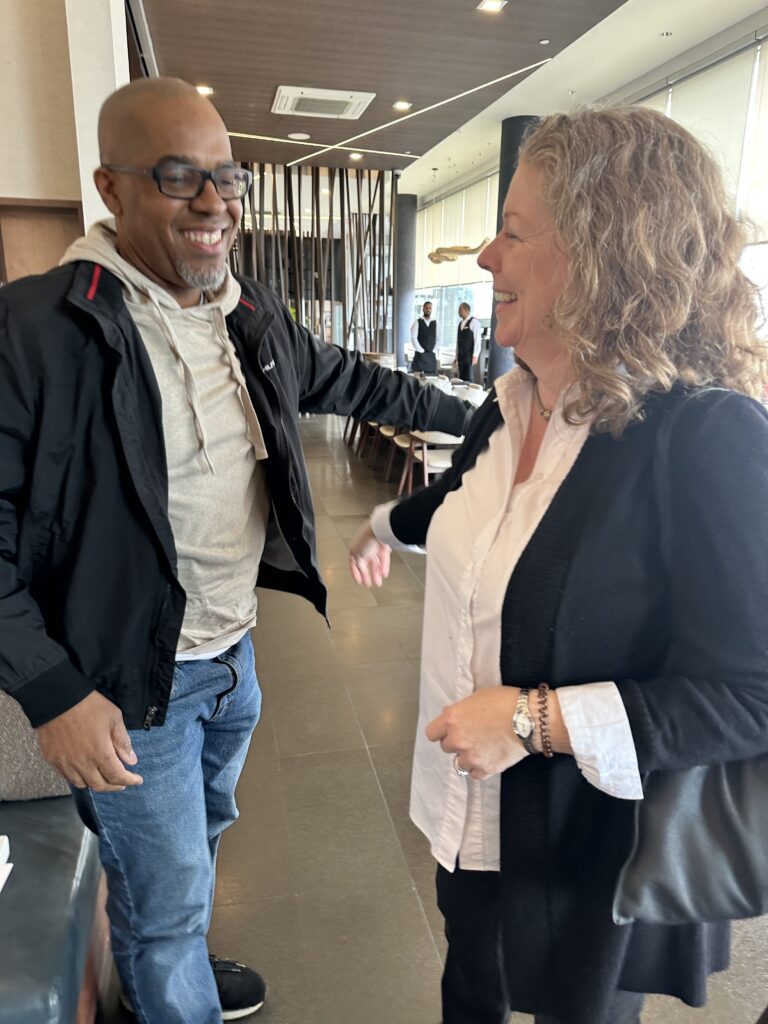
Field Notes Is an Experiment in Exactly This
In fact, this Field Notes project is becoming its own small example.
A group of Certified Systems Business Coaches® comes together. We choose one topic. Everyone takes the idea in a different direction based on their experience, their clients and their perspective.
Then we publish.
We read each other’s work. We quote one another when it fits. We link to each other’s articles, podcasts and videos. We comment, share and continue the conversation.
And something interesting happened this month.
The coaches began referencing each other.
Nick’s article connects back to ideas from Sophia, Anthony, Annia, Ruth and Kirsten. The individual contributions are starting to become something larger than six separate pieces of content.
That is exactly what we hoped Field Notes would do.
Nobody has to say the same thing.
In fact, the value comes from the fact that we don’t.
Over time, we learn from each other, our readers discover other coaches and ideas, our collective body of work becomes stronger, and the professional relationships between us deepen.
That is community at work.
And perhaps that is the real lesson.
Community is not a collection of contacts. It is a network of relationships where people contribute to each other’s success.
For a small business owner, that network can become incredibly valuable.
So here are a few questions worth considering:
Who is in your business community today?
Where do you go when you don’t know the answer?
Who challenges your thinking?
Who opens your eyes to opportunities you couldn’t see on your own?
Who would notice if you stopped showing up?
And perhaps most importantly:
Who are you helping succeed?
Because the strongest communities aren’t built around what we can get from them.
They’re built by people willing to contribute to each other.
More From This Month’s Field Notes: Creating Community
Explore the other perspectives in this month’s conversation:
Annia Mercado: Business Communities for Latina Entrepreneurs
Ruth Burk: The Competitive Advantage for Founders That AI Can’t Replace
Anthony Gordon: Change This One Thing and Watch Your Business Transform
Sophia Konstantinovna: The Art of Community: Creating a Place Where People Belong
Kirsten Jenner: Importance of Community
Nick Armstrong: Community is a System: How to Build a Customer Base From Scratch
This post is part of Field Notes, a monthly publishing roundtable featuring Certified Systems Business Coaches® sharing knowledge and approaches based on what they’re seeing with their own clients. This month’s focus is Creating Community. Because no two coaches approach a business system exactly the same way, each contribution offers a different perspective.
Explore Field Notes and more insights from Certified Systems Business Coaches®.